Cats can be sensitive to changes in diet, supplements, medications, and household products. That makes careful research especially important when a new botanical product enters the picture. Holistapet CBD Oil for Cats has become a common search topic among pet owners who want to understand whether cannabidiol has a practical place in feline care, what research actually shows, and what safety questions remain unanswered. The available evidence is still limited, and product quality can vary considerably. A careful approach starts with understanding what CBD is, separating it from THC, and speaking with a veterinarian before giving any cannabinoid product to a cat.
Understanding CBD and Feline Health
CBD, or cannabidiol, is one of many naturally occurring compounds found in the cannabis plant. Unlike delta-9-tetrahydrocannabinol (THC), CBD does not produce the same intoxicating effects associated with THC. That distinction matters because cats can be harmed by cannabis products containing THC. The ASPCA lists marijuana as toxic to cats and identifies delta-9-THC as the toxic principle. Reported signs of cannabis exposure can include sleepiness, poor coordination, vomiting, dilated pupils, excessive salivation, low blood pressure, low body temperature, tremors, and seizures.
CBD itself has attracted interest because researchers have investigated possible effects involving pain, inflammation, anxiety, seizures, and other areas of animal health. Those subjects should be discussed carefully because evidence from one species does not automatically apply to another. A finding in dogs, laboratory animals, or humans cannot be treated as proof that the same dose or effect will occur in cats.
Why feline research matters
Cats process substances differently from humans and may also respond differently from dogs. Their liver has distinctive metabolic characteristics, which can affect how certain compounds are absorbed, broken down, and eliminated. For that reason, a product designed for human use should not automatically be considered appropriate for a cat.
The FDA currently states that it has not approved cannabis for any use in animals and cannot assure the safety or effectiveness of cannabis products marketed for pets. The agency recommends discussing appropriate treatment options with a veterinarian.
Research into CBD and companion animals continues, but the amount of high-quality feline evidence remains relatively small compared with the volume of products available to consumers. Marketing language can therefore move faster than the science.
What Owners Should Check First
The bottle is only one part of the safety picture. Before considering a cannabinoid product, the cat’s age, weight, medical history, current medications, and reason for use should all be considered. A cat with an ongoing medical problem may require diagnosis and conventional treatment rather than an unapproved supplement.
A veterinarian can also help determine whether a symptom could signal a condition that needs immediate attention. Changes such as persistent vomiting, difficulty walking, sudden behavior changes, loss of appetite, unusual sedation, or seizures should not be managed at home with a new supplement.
Product-label details worth reviewing
Several label details can help identify potential concerns:
- The amount of CBD per serving or measured drop should be clearly stated.
- THC content should be disclosed, especially because THC is toxic to cats.
- Ingredients should be listed individually rather than hidden behind vague blends.
- The product should identify the intended animal species and serving instructions.
- Batch or laboratory information can provide additional information about cannabinoid content and contaminants.
- Oils containing unnecessary flavorings, essential oils, or other additives deserve extra scrutiny.
The FDA has reported concerns about the quality of some CBD products, including products that did not contain the amount of CBD stated on their labels. The agency has also investigated potential contamination involving substances such as pesticides, heavy metals, and THC.
A clear label does not prove that a product is effective or appropriate for a particular cat. It simply gives the owner and veterinarian better information for evaluating the product.
Why THC-free claims deserve attention
The terms “hemp,� “hemp oil,� and “CBD� can create confusion. They do not necessarily mean the same thing, and a hemp-derived product may contain cannabinoids other than CBD. THC exposure is a separate safety concern for cats.
A product intended for a feline should therefore be evaluated by its actual ingredient profile rather than by the word “hemp� printed prominently on the package. If cannabinoid concentrations are unclear, determining the amount a cat would receive becomes difficult.
Practical Safety Considerations at Home
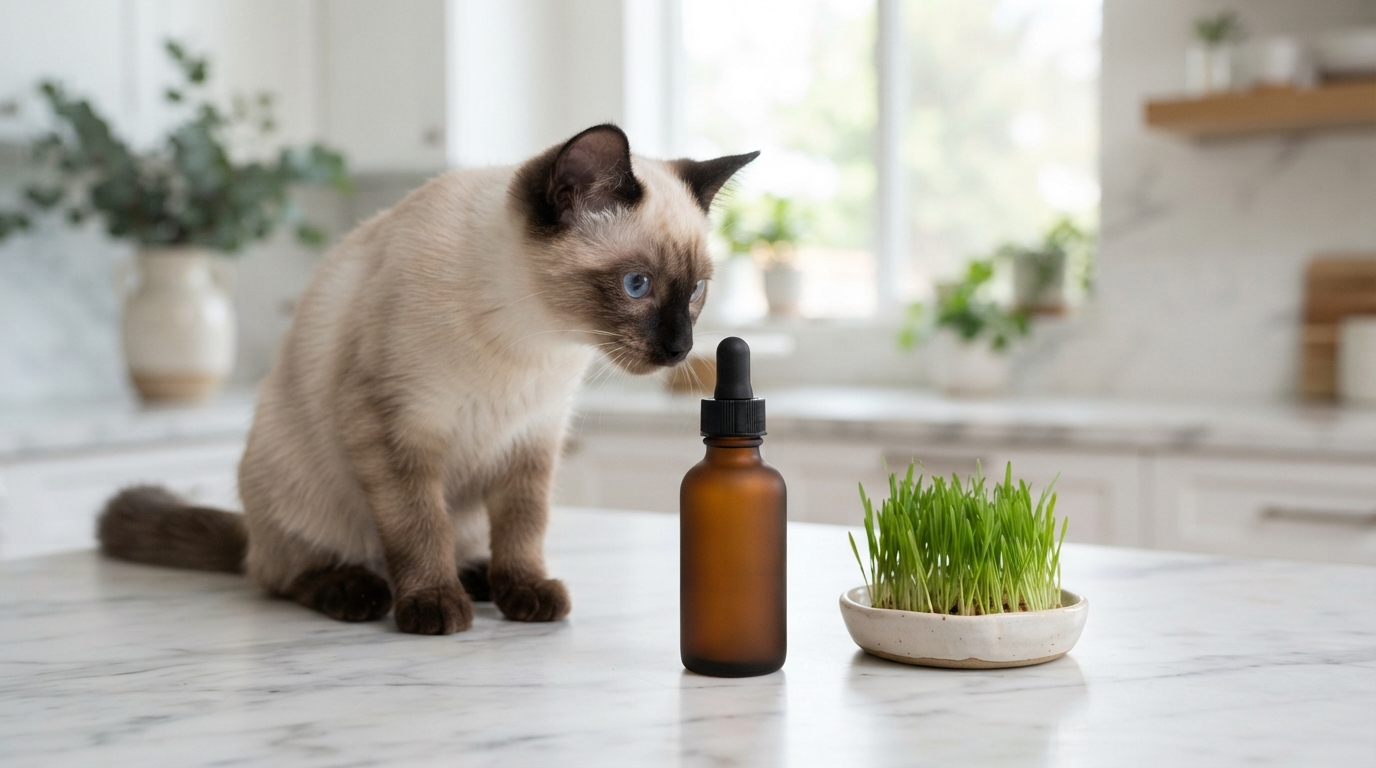
Storage is an easy part of the process to overlook. Cats are curious and can investigate bottles, droppers, bags, and containers left on counters or bedside tables. Any cannabinoid product should be stored securely and separately from human medications and other household substances.
The FDA identifies marijuana among potentially dangerous items for pets and advises owners to keep harmful substances away from animals. Human medications can also be dangerous to cats, so a pet should never be given a human product simply because the ingredient appears familiar.
Avoid guessing a dose
There is no universally established CBD dose that can be presented as safe for every cat. Body weight alone is not enough to determine an appropriate amount because concentration, formulation, medical condition, other medications, and individual response can all affect risk.
Online dosing charts may look precise, but a precise-looking number is not necessarily supported by feline clinical evidence. This is especially relevant when a product contains multiple cannabinoids or additional active ingredients.
A veterinarian may ask questions such as:
- What condition is the cat experiencing?
- How long have the symptoms been present?
- What medications or supplements is the cat already receiving?
- Has the cat had liver, kidney, gastrointestinal, or neurological problems?
- What exact product and concentration are being considered?
Those details provide a more useful basis for decision-making than a generic dose calculated only from body weight.
Watch for changes after exposure
Any unusual reaction after a cat receives a cannabinoid product deserves attention. Possible concerns can include excessive sleepiness, vomiting, diarrhea, changes in appetite, agitation, poor coordination, tremors, or other abnormal behavior. The FDA lists lethargy, depression, drooling, vomiting, agitation, tremors, and convulsions among signs that may occur after pets ingest cannabis.
If a cat accidentally consumes a product containing THC or an unknown cannabinoid concentration, veterinary advice should be sought promptly. Waiting for severe symptoms can make an exposure harder to manage.
Reading the Evidence Without Overstating It
CBD research in animals is often discussed in connection with pain and mobility, particularly osteoarthritis. Other areas of interest include anxiety and seizure disorders. The ASPCA has noted that research is underway into possible uses for CBD in pets, while also emphasizing that many questions remain unanswered.
That distinction between research interest and established treatment is important. A study may show that a compound deserves further investigation without proving that a commercially available oil treats a specific condition in household cats.
What current evidence can and cannot establish
Current evidence can help researchers identify possible effects, safety concerns, and areas that deserve additional study. It does not establish one standard product, one universal dose, or one guaranteed outcome for all cats.
The FDA’s position is particularly relevant for owners in the United States. The agency states that CBD has not been approved for use in animals and that it cannot ensure the safety or effectiveness of cannabis products marketed for pets.
This also explains why responsible discussions about feline CBD should avoid claims that a product can cure disease, replace prescribed medication, or provide predictable results in every animal. Those claims go beyond what the available evidence supports.
Final Thoughts
CBD products remain an area of interest in feline care, but research and regulatory approval have not established a universal safety or dosing standard for cats. Veterinary guidance, careful product evaluation, secure storage, and attention to possible adverse effects provide a safer framework for making decisions about cannabinoid products.